
Actual New Years Dog Training Resolutions

To tell you what you don’t want to hear, “He knows it at home” isn’t believable. It’s not impressive. Where it actually counts is with distractions. And then, every January, we hear the same response: “This year I’m actually going to train my dog,” followed by silence.
Cool. Let’s actually do the training this time. No more making excuses for your dog. 2026 is your dog’s year.
If obedience is a goal for you this year, here’s where your focus needs to be (and where you’re probably getting stuck): off-leash control, distractions, and understanding tools. Read below for a plan you can actually commit to.
Resolution #1: Off-Leash Control or Recall
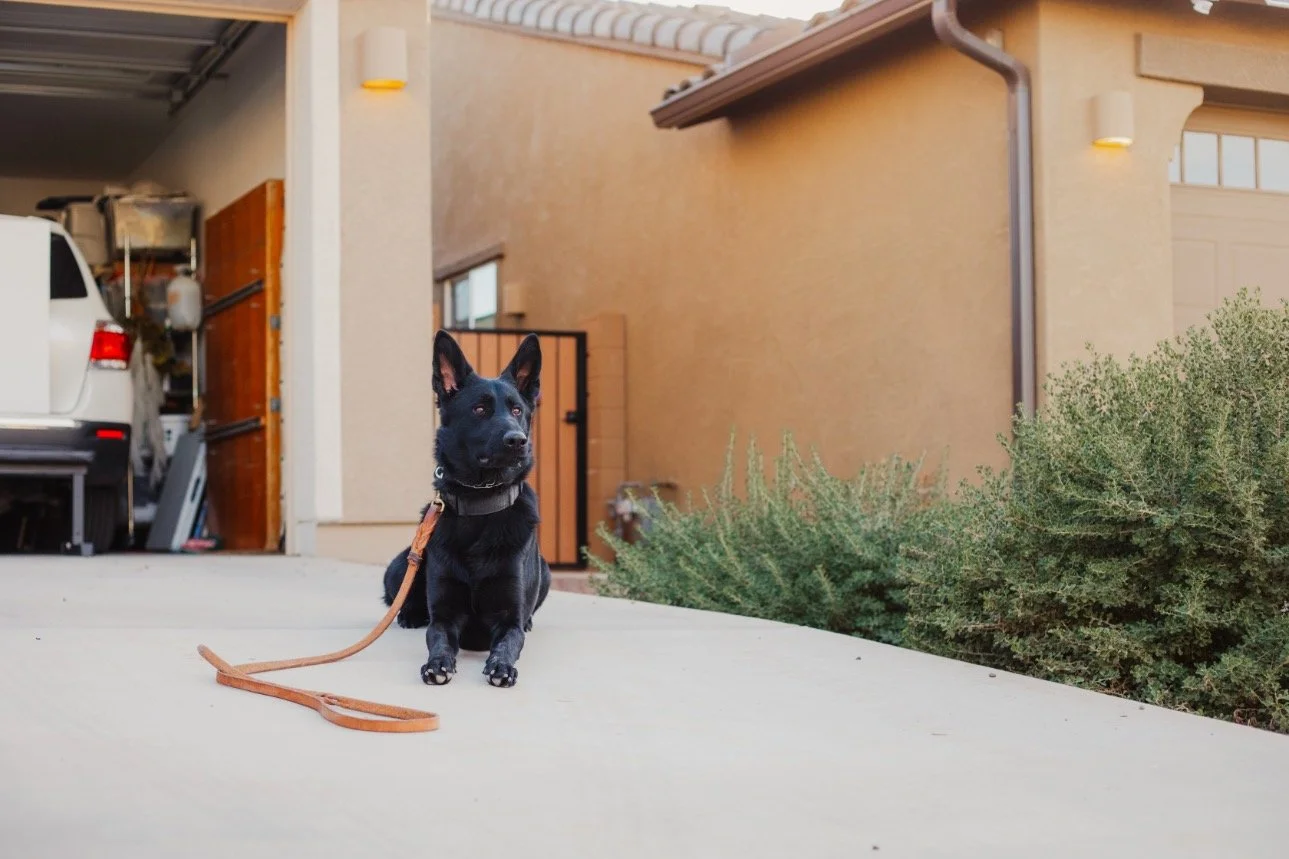
Off-leash obedience isn’t about guesswork. It’s all about reliability. If your dog only comes when nothing else is happening, runs off, or makes you question your ability to coral them, then your dog is not off leash trained.
You shouldn’t be taking your dog off-leash to a park to throw the ball if they stop recalling the moment another dog, person, or rabbit walks by. That means your dog is leash-dependent obedient, which is a great first step.
Not only does off leash training mean freedom to do more with your pup, but it’s safer, too. If the front door is left open or they jump out of the car too quickly, having the ability to recall your off-leash dog can be the difference between life and death.
Off-leash training takes structured training sessions and a lot of patience. Eventually, your goal should be to recall your dog:
The first time
No matter the distance
In any environment with distractions
Without yelling or chasing
Here’s how to start off leash training:
Begin with a long line (15–30 ft) and one consistent recall word (i.e. their name or “come”)
Call your dog once, then guide them in if needed.
Always finish the recall, even if you have to help.
Reward when your dog reaches you.
Practice 5-10 minute sessions a few times a week.
As reliability improves:
Increase distance and change locations.
Call your dog while they’re mildly distracted (sniffing, wandering, or looking away).
Getting there takes structure and progression. The leash is a teaching tool, not something you’re supposed to rely on forever. Off-leash freedom is earned through consistency, not crossed fingers.
Resolution #2: Train for Distractions

Your dog deserves to do things outside of your living room. They should have the foundations to go to trails, parks, or a friend’s house without pure chaos.
If all your obedience falls apart the moment you step outside the house, that’s not your dog being “stubborn.” It means you need to take the next step in training your dog.
Distraction training should include:
Teaching your dog how to work through pressure (like jumping over a wall without fear)
Gradually increasing difficulty (like going to a pet store)
Following through on commands instead of repeating them louder
Holding standards even when the environment changes
Train distractions on purpose. Obedience problems don’t always show up inside the house. If they ignore you at the park, they’re not being disobedient. They’re overstimulated and undertrained for the environment.
Distraction training makes obedience reliable. It teaches your dog how to stay calm and stay engaged when stimulation increases.
Distractions should be practiced intentionally and systematically, with clear expectations and consistent follow-through. Here’s how to do it:
Add small distractions at home (doors opening, cat noises on the TV) while practicing basic obedience.
When your dog holds commands there, move to a new room and continue practicing.
After practicing with short sessions, move to the outside with distant distractions.
Resolution #3: Stop Being Confused About the E-Collar
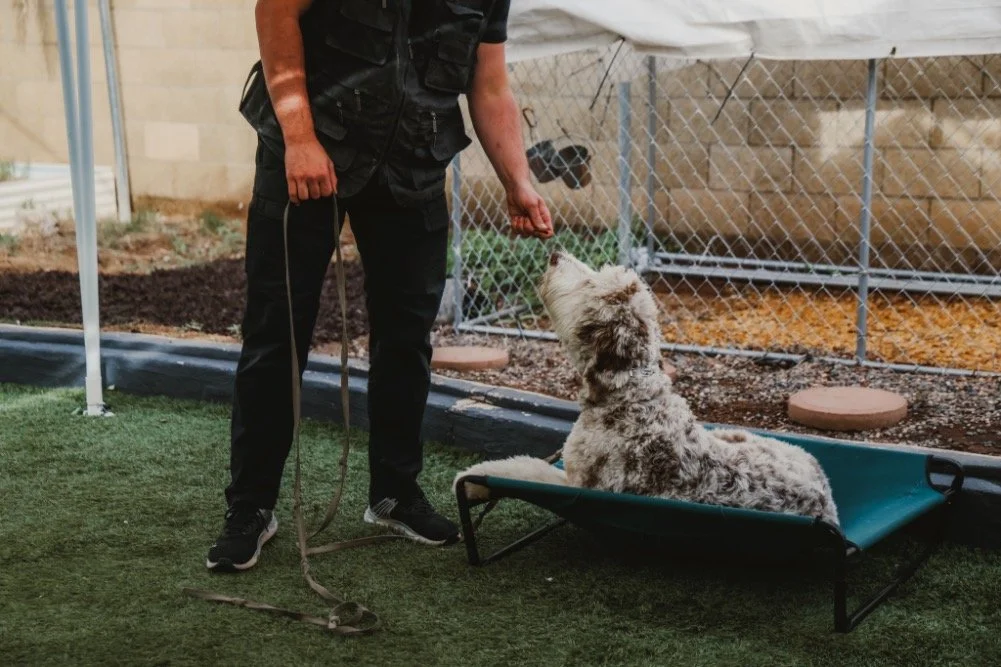
An e-collar is not a shortcut, punishment button, or last resort for “bad dogs. It doesn’t replace training. It is not a magic fix for training. Any trainer that relies on an e-collar is a red flag.
There is a lot of fear mongering around e-collars, but the real problems come from zero education, incorrect timing, skipping foundational obedience, and using it way too much.
When used correctly, an e-collar is:
A communication tool
A way to maintain consistency at distance
A bridge between on-leash and off-leash reliability
Here’s what to do:
Start asking questions and doing research.
Talk to a trainer about introducing the tool.
If you feel ready, introduce the e-collar at a very low level. Pair it with treats or praise so your dog learns that it is information, not punishment.
Pair it with commands or leash obedience. If your dog looks confused or scared, slow down.
Resolution #4: Be Consistent and Structured
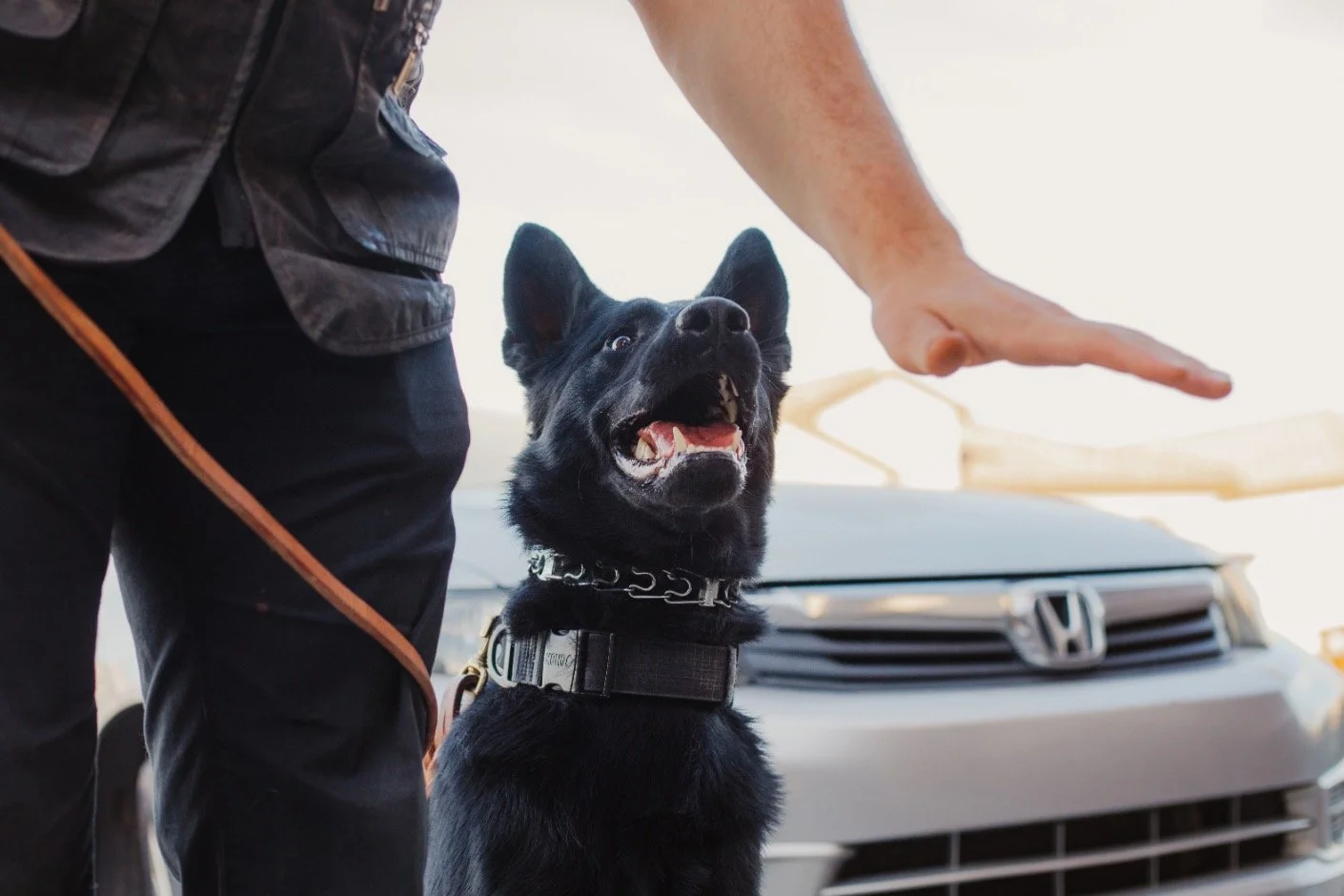
Lack of consistency and structure is where training resolutions go to die. If you allow repeated commands, selective listening, and no follow through, your dog won’t “get there eventually.”
For a dog, if commands are optional sometimes, they’ll be optional all the time. Dogs don’t need perfection, but they do need consistency. Obedience is successful when it is clear, fair, and predictable. They should know what is expected, what isn’t allowed, and what the follow through will be every time.
Here’s how to build consistency:
Decide which commands matter the most to you (ex. recall, down stay, or kennel training).
Enforce them the same way every time. Don’t mix treats, praise, or different types of corrections.
Do not repeat commands. Say it clearly once, then show your dog what is expected of them. For example: tell your dog “Place” as a command to lay on their bed. If they do not listen, don’t keep saying “place.” Instead guide them to the bed into laying down.
Continue with short training sessions instead of correcting your dog randomly through the day.
Make This the Year You Actually Follow Through

If you feel like your training has stalled or you’re not sure where to go next, we can help. With a free consultation, we’ll review your dog’s current obedience level, off-leash training, distraction struggles, and whether an e-collar makes sense for you.
Book your free consultation to take the next step in your training journey.